Thursday, February 29, 2024

Streamlining Oracle NetSuite Integration: Seamless Data Exchange and Enhanced Business Processes with eZintegrations


In today's dynamic business landscape, the efficient integration of disparate systems is crucial for maximizing productivity and staying competitive. eZintegrations offers a comprehensive solution for seamlessly connecting Oracle NetSuite with various systems, unlocking the full potential of your business processes. With a focus on Netsuite data extraction, Netsuite integration, and Netsuite data integration, eZintegrations empowers organizations to create dependable and scalable integrations that enhance NetSuite's capabilities across the board.


NetSuite Integration Made Easy

eZintegrations simplifies the process of connecting NetSuite to any other system without the need for a staging platform or risking data breaches. By efficiently processing large data repositories and leveraging NetSuite's scalability, eZintegrations reduces operational costs, minimizes data errors, and automates manual processes. This ensures that customers have increased control over their business data stored in the ERP, leading to improved customer experiences.


Benefits of eZintegrations NetSuite Platform Integration

1. Unified API Testing Hub: Access and test all APIs in one centralized platform, enabling efficient and customizable testing workflows.

2. Seamless Data Streaming: Stream millions of records daily for a continuous and dynamic flow of data, adapting to specific streaming needs in real-time.

3. NetSuite Integration Mastery: Effortlessly integrate NetSuite with APIs, databases, and various protocols, achieving seamless connectivity and data flow.

4. Streamlined Integration Monitoring: Comprehensive monitoring of integration processes with real-time insights into system activities, ensuring prompt issue resolution.

5. Intelligent Alerting System: Receive alerts promptly for record failures and anomaly detection, maintaining the integrity of integrated systems.

6. Developer Friendly: Facilitate integration tasks with familiar tools like Postman for working with REST interfaces and metadata.

7. Manage Enormous Data: Support movement and storage of vast amounts of data without compromising security or integrity.


Features of eZintegrations NetSuite Platform Integration

1. Suite Talk REST Web Services: Access NetSuite business objects programmatically as REST resources, facilitating CRUD operations and high-performance queries.

2. Suite Talk SOAP Web Services: Access NetSuite data and processes over desired interfaces, supporting asynchronous CRUD operations callable by any standard programming language.

3. High-Volume Data Pipeline: Efficiently provision NetSuite data to external systems, enabling scalable data transfers over standard interfaces.

4. REST API Browser: Visual inspection of REST web services capabilities, providing essential information about record properties, schema definitions, and more.


Use Cases of NetSuite Integration

1. NetSuite to Azure Cosmos DB (Bi-directional): Establish a bidirectional connection between NetSuite and Azure Cosmos DB for real-time data synchronization.

2. NetSuite to EpiServer: Seamlessly exchange data between NetSuite's ERP system and EpiServer's CMS and digital commerce platform.

3. NetSuite to PIMworks (Bi-directional): Synchronize product information bidirectionally between NetSuite and PIMworks for consistency.

4. NetSuite to Bizdata Datalake: Connect NetSuite with Bizdata Datalake for advanced analytics and reporting.

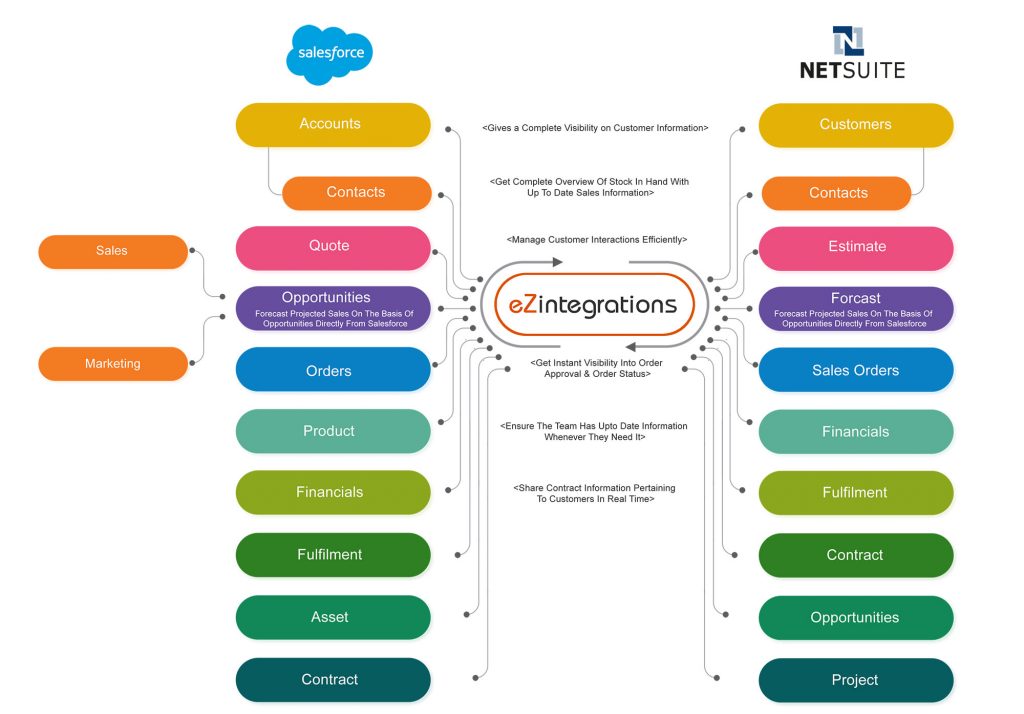
5. NetSuite to Salesforce: Integrate customer data and sales transactions between NetSuite and Salesforce for a unified view.

6. NetSuite to Azure DB: Store and retrieve data from NetSuite in Azure Database for enhanced data management.

7. NetSuite to Oracle Planning Cloud: Transfer financial and operational data between NetSuite and Oracle Planning Cloud for comprehensive planning and analysis.


Additional Integration Solutions

  • Integrate Visual Assets with NetSuite for organized management of digital content.
  • Achieve seamless integration of item catalog details and variants within NetSuite.
  • Streamline the entire Order to Cash workflow with your eCommerce application.
  • Enhance financial operations by integrating payment gateway verification directly into NetSuite.
  • Optimize data management by integrating NetSuite with data warehouses and datalakes.
  • Facilitate smooth communication and data exchange by seamlessly integrating Electronic Data Interchanges (EDI) with NetSuite.
  • Enhance business planning and forecasting capabilities by integrating NetSuite with Planning Engines like Oracle Planning Cloud.


In conclusion, eZintegrations provides a robust solution for integrating Oracle NetSuite with various systems, enabling organizations to streamline processes, enhance data exchange, and drive business growth. With its comprehensive features and use cases, eZintegrations empowers businesses to unlock the full potential of their NetSuite ecosystem and stay ahead in today's competitive landscape.

Thursday, February 22, 2024

Maximizing Business Efficiency: A Comprehensive Guide to NetSuite Integration with Salesforce


Introduction:

In today's fast-paced business environment, optimizing operations and enhancing productivity are paramount. NetSuite and Salesforce stand as stalwarts in their respective domains, offering robust solutions for enterprise resource planning (ERP) and customer relationship management (CRM). However, unlocking their full potential often requires seamless integration. This guide explores the intricacies of NetSuite integration with Salesforce, shedding light on the benefits, strategies, and use cases of this transformative process.

Understanding NetSuite Integration with Salesforce:

NetSuite integration with Salesforce, commonly known as Salesforce to NetSuite integration, bridges the gap between two powerful platforms, enabling seamless data exchange and workflow automation. This integration streamlines business processes, eliminates silos, and empowers organizations to harness the collective power of NetSuite and Salesforce. At its core lies the Netsuite Salesforce connector, a conduit for synchronizing data, optimizing sales operations, and driving business growth.

Key Benefits of Salesforce to NetSuite Integration:

1. Enhanced Data Visibility: By integrating NetSuite with Salesforce, organizations gain a comprehensive view of customer interactions, transactions, and financial data. This unified view enables sales teams to make informed decisions, personalize customer engagements, and drive revenue growth.

2. Streamlined Sales Processes: The NetSuite Salesforce connector automates sales processes, such as lead management, opportunity tracking, and quote-to-cash workflows. Sales reps can seamlessly create quotes, generate sales orders, and track customer interactions within the familiar Salesforce interface, streamlining the sales cycle and accelerating deal closure rates.

3. Improved Customer Experience: A seamless integration between NetSuite and Salesforce enhances the customer experience by providing a 360-degree view of customer interactions, preferences, and purchase history. Sales and support teams can deliver personalized service, address inquiries promptly, and build long-lasting customer relationships.

4. Accurate Sales Forecasting: By synchronizing sales data between NetSuite and Salesforce, organizations can generate more accurate sales forecasts and revenue projections. Advanced analytics and reporting capabilities enable businesses to identify trends, track performance metrics, and optimize sales strategies for maximum impact.

Implementation Strategies for NetSuite Integration with Salesforce:

Successful implementation of NetSuite integration with Salesforce requires careful planning, collaboration, and adherence to best practices. Here are some key strategies to consider:

1. Define Integration Objectives: Clearly define your integration objectives, such as data synchronization requirements, process automation goals, and desired outcomes. Identify the key data entities to be synchronized between NetSuite and Salesforce, such as accounts, contacts, leads, opportunities, and transactions.

2. Choose the Right Integration Approach: Evaluate different integration approaches, such as point-to-point integration, middleware platforms, or custom development. Select an approach that aligns with your business needs, technical capabilities, and scalability requirements.

3. Select a Reliable Integration Tool: Choose a reliable integration tool or platform that offers pre-built connectors, data mapping capabilities, and robust security features. The Netsuite Salesforce connector, available through eZintegrations™, simplifies the integration process and accelerates time-to-market.

4. Configure Data Mapping and Transformation: Define data mapping rules to ensure seamless data exchange between NetSuite and Salesforce. Map fields, objects, and record types to maintain data consistency and integrity across both platforms. Implement data transformation logic to handle data format conversions, field validations, and error handling.

5. Test and Validate Integration: Thoroughly test the integration solution to validate data accuracy, performance, and reliability. Conduct end-to-end testing scenarios, including data synchronization, process automation, and error handling. Involve key stakeholders in user acceptance testing (UAT) to ensure alignment with business requirements.

6. Train Users and Provide Support: Provide comprehensive training to users on how to use the integrated solution effectively. Create user documentation, tutorials, and training materials to support adoption and drive user engagement. Establish a support mechanism to address user queries, troubleshoot issues, and provide ongoing maintenance and enhancements.


Use Cases and Business Scenarios:

Let's explore some common use cases and business scenarios where NetSuite integration with Salesforce delivers tangible benefits:

1. Lead-to-Cash Automation: Streamline the lead-to-cash process by integrating Salesforce leads with NetSuite opportunities, quotes, and sales orders. Automate lead qualification, opportunity conversion, and order fulfillment workflows to accelerate sales cycles and improve revenue visibility.

2. Customer 360° View: Create a unified customer profile by synchronizing customer data between NetSuite and Salesforce. Consolidate account information, purchase history, support cases, and communication logs to provide sales and service teams with a comprehensive view of customer interactions.

3. Quote-to-Cash Optimization: Automate the quote-to-cash process by generating quotes, proposals, and contracts directly within Salesforce. Sync quote data with NetSuite for pricing, inventory availability, and discount approvals, ensuring accurate order fulfillment and revenue recognition.

4. Forecasting and Reporting: Leverage integrated sales and financial data for accurate forecasting, reporting, and analytics. Generate customized dashboards and reports in Salesforce to track sales performance, pipeline metrics, and revenue forecasts, using real-time data from NetSuite.

Conclusion:

NetSuite integration with Salesforce offers a myriad of benefits for businesses seeking to optimize sales processes, enhance customer experiences, and drive growth. By leveraging the power of the NetSuite Salesforce connector, organizations can unlock new opportunities for collaboration, innovation, and competitive advantage. Whether it's automating sales workflows, gaining actionable insights, or delivering personalized customer interactions, the integration between NetSuite and Salesforce empowers businesses to thrive in today's dynamic marketplace. Embrace the potential of NetSuite Salesforce integration and embark.

Tuesday, February 20, 2024

Maximizing Efficiency: The Power of Netsuite Integration Solutions


In the modern business landscape, seamless integration of enterprise resource planning (ERP) systems like Netsuite is essential for optimizing processes and driving growth. Netsuite integration solutions offer businesses the ability to connect Netsuite with various systems and applications, enabling smooth data exchange and enhancing overall efficiency. This article explores the significance of Netsuite integration, focusing on key aspects such as data integration, ERP integration, third-party integration, and API integration.

Netsuite Data Integration: Streamlining Business Operations

Netsuite data integration involves the seamless exchange of data between Netsuite and other systems within an organization. Whether it's synchronizing customer data, updating inventory levels, or processing financial transactions, efficient data integration ensures that information flows seamlessly across different platforms. By automating data transfer processes and eliminating manual data entry, Netsuite data integration streamlines operations, reduces errors, and improves overall productivity.


Netsuite ERP Integration: Centralizing Business Processes

Netsuite ERP integration goes beyond data exchange to encompass the integration of Netsuite with core business processes and functions. By integrating Netsuite with modules such as finance, inventory management, and customer relationship management (CRM), organizations can centralize their operations and gain a comprehensive view of their business activities. This integration enables real-time access to critical data, facilitates informed decision-making, and enhances overall business agility.


Netsuite Third-Party Integration: Expanding Functionality

Netsuite's ecosystem extends beyond its core functionalities, with a wide range of third-party applications and services available for integration. Third-party integration allows organizations to extend Netsuite's capabilities by integrating specialized solutions for specific business needs. Whether it's integrating with e-commerce platforms, payment gateways, or marketing automation tools, Netsuite third-party integration enables organizations to tailor their ERP system to their unique requirements and workflows.


Netsuite API Integration: Enabling Customization and Automation

Netsuite API integration provides organizations with the flexibility to customize and automate their ERP workflows using Netsuite's application programming interfaces (APIs). By leveraging APIs, organizations can build custom integrations, automate data exchange processes, and create seamless connections between Netsuite and other systems. Whether it's integrating with legacy systems, developing custom applications, or implementing complex business logic, Netsuite API integration empowers organizations to maximize the value of their ERP investment.


Benefits of Netsuite Integration Solutions:

1. Enhanced Efficiency: Netsuite integration solutions streamline business operations, reduce manual effort, and improve overall efficiency by automating data exchange processes and centralizing business functions.

2. Improved Data Accuracy: By eliminating manual data entry and ensuring real-time data synchronization, Netsuite integration solutions enhance data accuracy and integrity, providing organizations with reliable information for decision-making.

3. Increased Business Agility: Netsuite integration solutions enable organizations to adapt quickly to changing business needs by providing flexible and scalable integration options that can evolve with their requirements.

4. Enhanced Customer Experience: By integrating Netsuite with CRM systems and other customer-facing applications, organizations can deliver a seamless and personalized customer experience, driving customer satisfaction and loyalty.

Conclusion:

Netsuite integration solutions play a crucial role in maximizing the efficiency and effectiveness of ERP systems by enabling seamless data integration, centralizing business processes, expanding functionality, and enabling customization and automation. By leveraging Netsuite integration solutions, organizations can streamline operations, improve data accuracy, increase agility, and enhance the overall customer experience, positioning themselves for success in today's competitive business environment.

Monday, February 19, 2024

Maximizing Efficiency: Integrating Biometric Access Control with Oracle Time and Labor


In today's dynamic business landscape, the integration of biometric access control systems with Oracle Time and Labor (OTL) presents a powerful solution to streamline workforce management and enhance operational efficiency. This synergy between cutting-edge biometric technology and robust time tracking software revolutionizes the way organizations monitor employee attendance and manage labor resources.

Biometric access control systems have emerged as a cornerstone of modern security infrastructure, offering unparalleled accuracy and reliability in verifying individual identities. By leveraging biometric identifiers such as fingerprints, iris scans, or facial recognition, these systems ensure that only authorized personnel gain access to secure facilities, sensitive data, and critical systems. The implementation of biometric access control not only enhances security measures but also eliminates the vulnerabilities associated with traditional methods such as keycards or passwords, mitigating the risk of unauthorized access and potential security breaches.

Meanwhile, Oracle Time and Labor (OTL) stands at the forefront of workforce management solutions, providing organizations with comprehensive tools to streamline time tracking, attendance management, and payroll processing. With features ranging from automated data capture to sophisticated reporting capabilities, OTL empowers businesses to optimize labor resources, minimize compliance risks, and enhance operational efficiency. However, the true power of OTL is unleashed when seamlessly integrated with biometric access control systems, creating a unified ecosystem that simplifies and enhances every aspect of workforce management.

The integration of biometric access control with Oracle Time and Labor offers a multitude of benefits for organizations across various industries. Firstly, it enables seamless synchronization of employee attendance data between biometric terminals and OTL, ensuring real-time visibility into workforce activities. Whether employees clock in using fingerprint scanners, facial recognition cameras, or iris scanners, the data is automatically captured and transmitted to OTL, eliminating manual entry errors and ensuring accurate attendance records.


Moreover, the integration facilitates the automation of time tracking and attendance management processes, reducing administrative burden and increasing operational efficiency. With predefined rules and workflows in place, organizations can automate tasks such as overtime calculation, shift scheduling, and absence management, allowing managers to focus on strategic initiatives rather than routine administrative tasks. This automation not only saves time and resources but also minimizes the risk of compliance violations and payroll discrepancies, ensuring fair and accurate compensation for employees.

Furthermore, the integration of biometric access control with OTL enhances security measures within the organization, safeguarding sensitive assets and data against unauthorized access. By incorporating biometric authentication into the time and attendance process, organizations can ensure that only authorized individuals are granted access to secure facilities, workstations, or IT systems. This not only strengthens overall security posture but also instills a sense of trust and accountability among employees, knowing that their access privileges are protected by advanced biometric technology.

Additionally, the integration enables organizations to gain valuable insights into workforce trends, patterns, and productivity levels through advanced reporting and analytics capabilities. By consolidating data from biometric access control systems and OTL, organizations can identify areas for improvement, optimize resource allocation, and make data-driven decisions to drive business growth and performance.

In conclusion, the integration of biometric access control systems with Oracle Time and Labor represents a paradigm shift in workforce management, combining the security of biometric authentication with the efficiency of OTL's time tracking and attendance management capabilities. By harnessing the power of these technologies, organizations can enhance security, streamline operations, and empower their workforce to achieve peak performance in today's competitive business landscape.

Thursday, February 15, 2024

Maximizing Efficiency: Comprehensive Netsuite Integration Solutions


In the fast-paced world of modern business, seamless integration is paramount for maximizing efficiency and staying ahead of the competition. Netsuite, a leading ERP solution, offers a powerful platform for managing core business processes such as finance, HR, and inventory management. However, to truly harness its potential, organizations must integrate Netsuite with other systems, including third-party applications, APIs, and data sources.

Netsuite ERP Integration:

Netsuite ERP integration involves the seamless connection of Netsuite with internal systems and databases, allowing for the exchange of critical business data. By integrating Netsuite with core systems such as CRM and accounting software, organizations can streamline processes, improve data accuracy, and enhance decision-making capabilities.

Netsuite Third-Party Integration:

Third-party integration extends the functionality of Netsuite by integrating it with external applications and services. Whether integrating with e-commerce platforms, marketing automation tools, or business intelligence software, Netsuite third-party integration enables organizations to leverage additional functionalities and services to meet their unique business needs.

Netsuite API Integration:

Netsuite API integration allows for real-time communication between Netsuite and external systems, enabling seamless data exchange and synchronization. By leveraging Netsuite's API capabilities, organizations can automate workflows, access data from multiple sources, and create custom integrations tailored to their specific requirements.

Netsuite Data Integration:

Data integration is critical for ensuring the consistency and accuracy of information across the organization. Netsuite data integration involves the synchronization of data between Netsuite and other systems, databases, and repositories. By integrating customer data, inventory information, and financial records, organizations can maintain a single source of truth and drive data-driven decision-making.

Conclusion:

In conclusion, comprehensive Netsuite integration solutions encompass ERP integration, third-party integration, API integration, and data integration. By seamlessly connecting Netsuite with internal and external systems, organizations can maximize efficiency, streamline processes, and unlock the full potential of their ERP investment. Embracing Netsuite integration allows organizations to adapt to changing business requirements, improve collaboration, and deliver exceptional customer experiences.

Monday, February 12, 2024

Streamlining Business Connectivity: A Comprehensive Guide to Integrating APIs


In the fast-paced digital landscape, the integration of Application Programming Interfaces (APIs) has emerged as a fundamental strategy for organizations aiming to optimize processes, enhance collaboration, and elevate user experiences. This guide is dedicated to exploring the intricacies of integrating APIs, providing actionable insights and best practices to navigate this critical aspect of modern business operations.


Understanding API Integration:

API integration refers to the process of seamlessly connecting and synchronizing disparate software applications through the utilization of APIs. APIs serve as the bridge that enables communication and data exchange between different systems, facilitating interoperability and driving efficiency.

The Significance of API Integration:

The significance of API integration in today's business environment cannot be overstated. By effectively integrating APIs, organizations can realize a multitude of benefits, including:

1. Enhanced Efficiency: API integration streamlines workflows, automates processes, and eliminates manual data entry, leading to increased productivity and cost savings.

2. Improved Data Accuracy: By integrating APIs, organizations can ensure the consistency and accuracy of data across multiple systems, minimizing errors and discrepancies.

3. Expanded Connectivity: API integration enables seamless connectivity between disparate applications and systems, fostering collaboration and facilitating real-time data exchange.

Navigating the API Integration Landscape:

Successfully integrating APIs requires careful planning, strategic execution, and ongoing optimization. Here's a step-by-step guide to mastering the art of API integration:

1. Define Integration Objectives:

   Before embarking on the integration journey, it's crucial to clearly define your integration objectives and identify the desired outcomes. Whether it's enhancing customer experience, improving operational efficiency, or driving innovation, having a clear vision will guide your integration efforts.

2. Assess API Compatibility:

   Evaluate the compatibility of the APIs you intend to integrate, considering factors such as functionality, versioning, and documentation. Ensure that the APIs align with your integration objectives and possess the necessary features to support seamless integration.

3. Design Integration Architecture:

   Develop a robust integration architecture that outlines the data flow, communication protocols, and integration points between different systems. Consider factors such as scalability, security, and flexibility when designing your integration architecture to ensure optimal performance and reliability.

4. Implement Integration Middleware:

   Leverage integration middleware platforms or tools to facilitate communication and data exchange between disparate APIs. Integration middleware serves as the intermediary layer that orchestrates data flow, transforms formats, and enforces security protocols, simplifying the integration process.

5. Configure Data Mapping and Transformation:

   Define data mapping schemas and transformation rules to standardize data formats and structures across integrated systems. By harmonizing data representation, organizations can ensure seamless data exchange and minimize interoperability issues.

6. Establish Error Handling Mechanisms:

   Implement robust error handling mechanisms to detect, log, and resolve integration errors in real-time. Proactive error management ensures data integrity and maintains service reliability across integrated systems.

7. Perform Integration Testing:

   Conduct comprehensive integration testing to validate the functionality, performance, and reliability of the integrated system. Integration testing helps identify and address potential issues, ensuring a smooth transition to production and optimal system performance.

8. Monitor and Optimize Integration Performance:

   Deploy monitoring tools and performance metrics to track the health, throughput, and latency of integrated APIs. Continuously monitor integration performance, identify optimization opportunities, and fine-tune integration parameters to enhance system responsiveness and efficiency.

By following these best practices and guidelines, organizations can navigate the complexities of API integration with confidence, unlocking the full potential of interconnected systems to drive business growth and innovation.


In Conclusion:

API integration is a cornerstone of modern business operations, enabling organizations to seamlessly connect and synchronize disparate systems for enhanced collaboration and efficiency. By adopting a systematic approach and leveraging best-in-class integration techniques, organizations can overcome integration challenges, optimize workflows, and deliver superior user experiences. As businesses continue to evolve in the digital age, mastering API integration will be essential for driving innovation, fostering agility, and maintaining a competitive edge in the marketplace.

Sunday, February 11, 2024

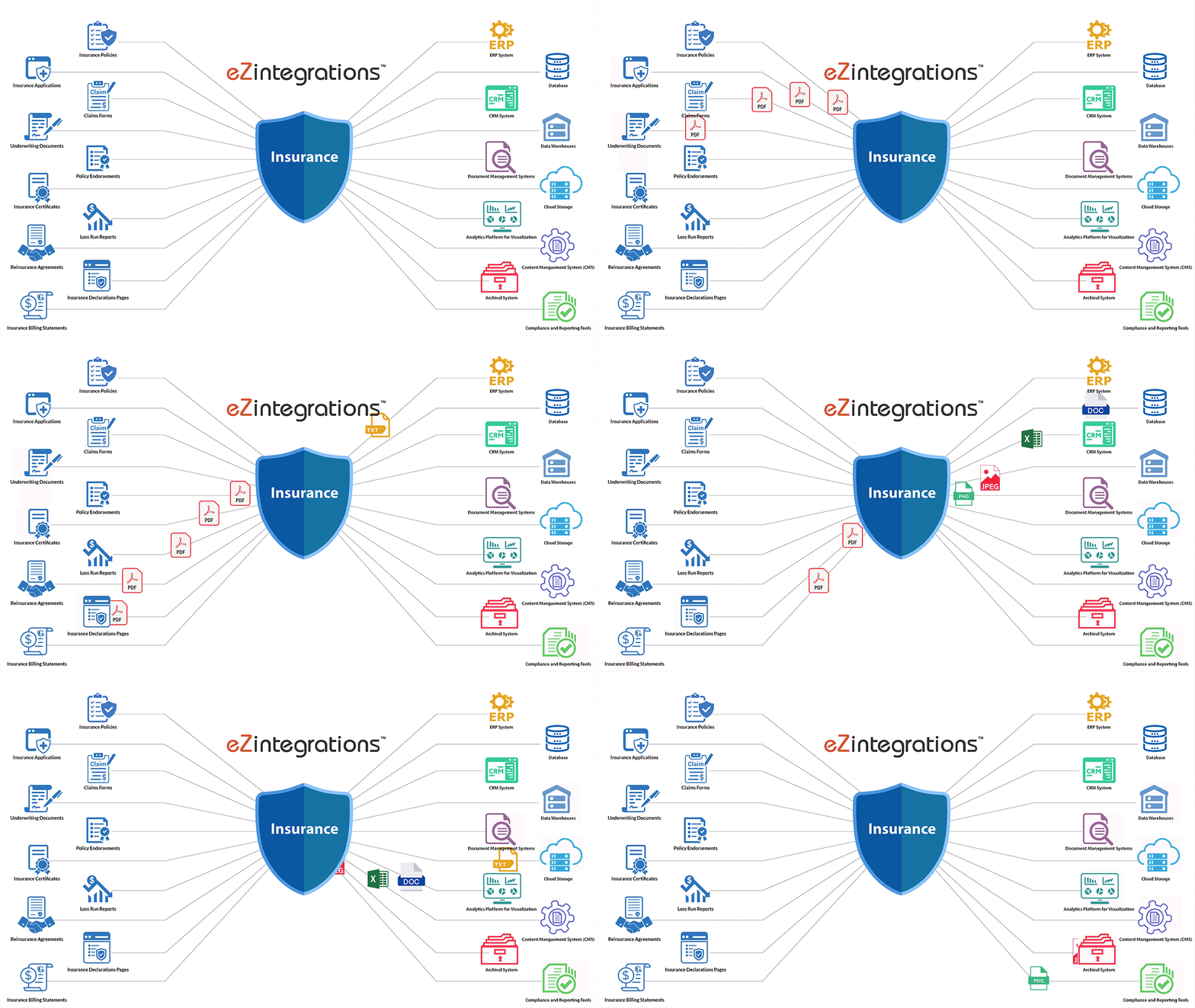
Unleashing the Power of AI Document Understanding in Streamlining Information Management for Insurance


In the dynamic realm of insurance, the effective management of information is paramount for streamlined operations, accurate risk assessment, and prompt claims processing. However, the industry grapples with various challenges including disparate document formats, complex data extraction needs, and the demand for real-time information retrieval. To address these challenges head-on, the integration of AI Document Understanding emerges as a transformative solution, leveraging advanced technologies to streamline document analysis, data extraction, and information retrieval processes.


The insurance sector is inundated with a plethora of documents ranging from policy contracts and claims forms to medical records and handwritten notes. Each document presents its unique set of challenges, including diverse content structures and formatting complexities. Traditional manual methods of data extraction often fall short in efficiently handling these documents, resulting in errors and delays. AI Document Understanding offers a groundbreaking approach by harnessing the power of Natural Language Processing (NLP) and machine learning to accurately extract and interpret data from various document types.


One of the key advantages of AI Document Understanding lies in its ability to seamlessly extract data from both structured and unstructured sources. Whether it's extracting information from standardized forms or deciphering unstructured text within lengthy documents, the system utilizes sophisticated algorithms to identify and capture relevant data with precision. This capability not only accelerates data entry processes but also enhances data quality, minimizing errors and inconsistencies commonly associated with manual extraction methods.


Moreover, AI Document Understanding excels in handling challenges such as multi-page documents and handwritten inputs. Through advanced image processing techniques and handwriting recognition algorithms, the system can accurately interpret handwritten text and extract pertinent information, eliminating the need for manual transcription and reducing processing times significantly. This capability proves invaluable in scenarios such as claims processing, where timely and accurate data extraction is crucial for efficient decision-making.


In addition to enhancing operational efficiency, AI Document Understanding prioritizes data security and confidentiality. Robust encryption protocols and access controls safeguard sensitive information throughout the extraction and processing pipeline, ensuring compliance with regulatory requirements and protecting customer privacy. This aspect is particularly critical in the insurance sector, where the handling of confidential client data is subject to stringent regulations.


Furthermore, the scalability of AI Document Understanding makes it well-suited for insurance companies of all sizes. Whether processing a handful of documents or managing high-volume document workflows, the system adapts seamlessly to meet evolving business needs without compromising efficiency or accuracy. This scalability empowers insurance organizations to scale their operations dynamically, enhancing agility and responsiveness in a competitive market landscape.


By leveraging AI Document Understanding, insurance companies can unlock new opportunities for innovation and growth. From optimizing underwriting processes and claims management workflows to improving customer service and regulatory compliance, the benefits of intelligent document processing extend across various facets of insurance operations. Ultimately, the integration of AI Document Understanding represents a significant step forward in driving operational excellence and delivering enhanced value to both insurers and policyholders alike.

Bizdata Joins NVIDIA Inception

  Bizdata has joined NVIDIA Inception, a program that nurtures startups revolutionizing industries with technological advancements. Bizdat...